Ingredients





Ingredients are all substances and components that are part of a finished product. This includes tobacco, additives, flavours as well as paper, filter, ink, capsules and glue.
The use of the ingredients in tobacco and related products such as e-cigarettes containing nicotine are subject to regulations of the European and German tobacco legislation.
Use of Additives
The manufacturing of tobacco products is strictly regulated. All additives that are harmful in unburned form or that have a carcinogenic or mutagenic effect are prohibited. Substances that could increase addiction and facilitate inhalation or nicotine intake must not be used.
Substances that might give the impression of health benefits and that are associated with energy and vitality, such as caffeine or taurine, are also prohibited.
Flavourings must not be used in filters, papers, packaging, capsules or other components of cigarettes.
Reporting Obligations
All ingredients of a product, their quantities and the associated toxicological data must be reported by the manufacturers to the competent authorities. This also includes information about the tobacco itself and certain smoke components.
The authorities are notified when the composition of a product is changed or before a new tobacco product will be launched. The information is submitted electronically to the national authorities via a European portal and in a standardised format ( BVL).
BVL).
Interested consumers can find the ingredients of a product on the websites of our member companies and the German Ministry of Food and Agriculture ( BMEL) as the authorities have a duty to supply information.
Priority Additives
Specific additives for cigarettes and fine cut are subject to more detailed reporting obligations and are to be assessed in more detail for being used in tobacco products. Cigarette manufacturers established a consortium for assessing the priority list of additives (carob bean, cocoa, diacetyl, fenugreek, fig, geraniol, glycerol, guaiacol, guar gum, liquorice, maltol, menthol, propylene glycol, sorbitol, titanium dioxide) and commissioned comprehensive studies for their toxicological assessment. The results of these studies were submitted to the authorities on 1 July 2018. In assessing this data, the individual EU member states are supported by a European working group - led by the Dutch National Institute for Public Health and the Environment (RIVM) and supported by the German Federal Institute for Risk Assessment (BfR) (). At the same time, three publications on the results of the consortium were put up for discussion by the academic community (LINK PubMed Publikationen).
“Characteristic Flavours”
Since 2016, cigarettes and fine cut have not been allowed to have any flavour other than tobacco. They must not smell or taste, for example, fruity, sweet or of vanilla. The reason for this ban: Tobacco products should not be attractive to children and adolescents due to their aroma.
An advisory panel and a technical group have been set up at the European level to implement this ban. Since 2016, these groups have been working on suitable methods and procedures for the sensory and chemical assessment of tobacco products.



Links
Download
Since May 20, 2020, the sale of menthol cigarettes has been completely banned in Germany. While characteristic flavors have been restricted in the EU since 2016, a transitional arrangement applied to menthol until 2020. Germany is going beyond the EU regulation: menthol is now prohibited in all smoking tobacco products—even in small quantities—as it is believed to facilitate nicotine absorption.
The BVTE criticizes this ban. Menthol cigarettes have a long tradition and were particularly popular among older smokers. According to the BVTE, the scientific data does not fully support the assumptions about menthol, so the association believes that a blanket ban on the use of menthol is not justified.
In Europe and particularly in Germany, the production of e-cigarettes is subject to strict legal requirements.
Limitation of Nicotine Content
In the EU, liquids may contain a maximum of 20 mg / ml nicotine. Liquids that contain nicotine may not exceed a volume of 10 ml. This is different in the United States. In the US market, there are no maximum values and quantitative limits for nicotine in e-cigarettes and liquids. In the US, some products have a nicotine content of over 55 mg / ml.
The use of certain flavours and other ingredients in nicotine-containing liquids of e-cigarettes is prohibited according to Appendix 2 of the Tobacco Product Ordinance. This includes, for example, additives that are associated with energy and vitality (e.g. caffeine or taurine), or vitamins or other substances that could be suggestive of health benefits. In addition, ingredients with CMR properties (carcinogenic, mutagenic, and toxic to reproduction) and other toxic ingredients are prohibited.
Use of Ingredients
Apart from nicotine, only ingredients of high purity and of no risk to human health may be used for the production of liquids and e-cigarettes.
For e-cigarettes, all additives that are harmful in unburned form or have a carcinogenic or mutagenic effect, may enhance addiction, have a stimulating and vitalizing effect or facilitate inhalation or nicotine absorption are prohibited. Vitamins and substances that could give the impression of health benefits and are associated with energy and vitality, such as caffeine or taurine, are also prohibited.
Labelling Obligations
In addition to warnings, the packaging and outer packaging of e-cigarettes and refill cartridges must also show a variety of information for the consumer such as the ingredients used, the nicotine content and the nicotine release per dose. You will find a compilation on the website of the Federal Office of Consumer Protection and Food Safety ( BVL).
Reporting Obligations
All ingredients of a product, their quantities and the associated toxicological data must be reported by the manufacturers to the competent authorities. This also includes information about the tobacco and certain smoke components. With this official notification, the manufacturers assume full responsibility for the quality and safety of the product.
The authorities are always notified when the composition of a product is changed or before a new tobacco product will be launched. The information is submitted electronically to the national authorities in a standardised format.
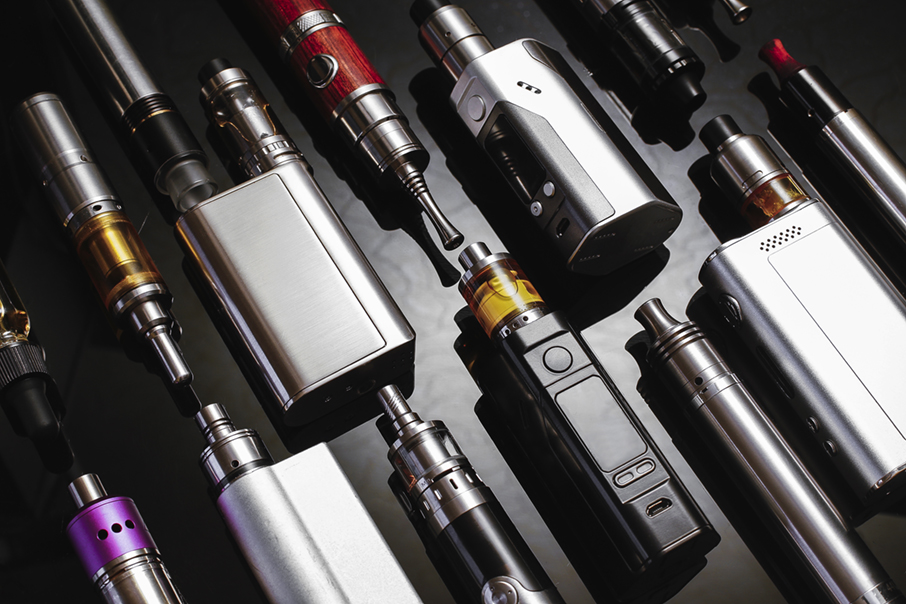
Menthol ban in e-cigarettes: Black market boosters instead of health protection
The inclusion of menthol as a prohibited ingredient for e-cigarettes in Annex 2 of the Tobacco Products Regulation is currently under discussion. However, such a menthol ban in e-cigarettes would not be justified from a health, consumer, or economic policy perspective. Menthol is a flavor and ingredient that has been tried and tested for decades and is used in foods, medicines, and inhalation products, among other things—including in e-cigarette liquids.
Menthol plays a central role in enabling adult smokers to switch from tobacco cigarettes to e-cigarettes, which are potentially less harmful. Up to 80 percent of e-liquids available on the market contain menthol in varying concentrations, including in tobacco or fruit flavors. In low doses, it rounds off the taste of e-cigarette liquids and is essential for consumer acceptance of the products.
Menthol in e-cigarettes is harmless to health
There is a clear health assessment for menthol. In 2019, the World Health Organization (WHO) set an acceptable daily intake (ADI) of 4 mg of menthol per kilogram of body weight. For an adult weighing 70 kg, this corresponds to a daily dose of up to 280 mg of menthol that is harmless to health – even with lifelong use.
The consumption of commercially available e-cigarettes is significantly below this amount. Even with high-dose menthol liquids, only around 30 percent of the ADI is reached with an average consumption of 2 ml of liquid. The amount of menthol consumed is roughly equivalent to the consumption of around 15 cough drops or mint chewing gum and does not pose a health risk.
Despite decades of menthol use in inhalation products, there is no clinical evidence of a link to respiratory diseases. Previous statements by the German Federal Institute for Risk Assessment (BfR) also provide no reliable evidence of health risks from menthol in e-cigarettes.
No increased addictive potential and no facilitated nicotine absorption
A frequently raised criticism is that menthol can facilitate inhalation or increase nicotine absorption. This is not the case with e-cigarettes. Unlike smoking tobacco, vaping does not produce any irritating combustion products whose effects would have to be masked by additives.
Back in 2015, the BfR assessed the relevance of menthol facilitating inhalation when vaping as very low. Clinical studies also show no increase in nicotine absorption due to menthol. On the contrary, scientific reports prove that menthol can even contribute to lower nicotine concentrations in e-liquids.
Menthol ban as a “backdoor” product ban
A national menthol ban on e-cigarettes would effectively amount to a product ban. Up to 80 percent of currently available e-liquids would no longer be marketable. Manufacturers would have to change their formulations exclusively for the German market, which would lead to higher prices, less choice, and changes in taste.
At the same time, there is a threat of a massive increase in the black market. Even today, a significant proportion of disposable e-cigarettes come from illegal, unregulated sources. A menthol ban would strengthen criminal structures and foreign online providers that would serve the existing demand for menthol-containing products. The legal e-cigarette trade in Germany faces further painful, existence-threatening losses in sales, and the state budget would lose urgently needed tobacco tax revenues in the hundreds of millions.
The consumption of e-cigarettes from the black market also poses a considerable risk to consumers. Similarly, the protection of children and young people is weakened, as illegal suppliers cannot be expected to reliably check the legal age of sale.
Germany's special path instead of European harmonization
No other EU member state has introduced a specific ban on menthol in e-cigarettes. A national special path would restrict the free movement of goods in the EU internal market without good reason and would undermine EU-wide harmonized regulations.
Position of the BVTE
The BVTE strongly rejects a ban on menthol in e-cigarettes. Such a ban offers no demonstrable health benefits, jeopardizes the legal market, weakens consumer and youth protection, and counteracts the goal of harm reduction for adult smokers.
Equal Regulations for All Liquids
So far all regulations for e-cigarettes only refer to products containing nicotine. The strict requirements do not apply to liquids that do not contain nicotine or that are mixed by the consumers themselves. A current bill of the Federal Government wants to close this gap for Germany. Then the same strict rules will apply to all liquids intended to be used in e-cigarettes, at least on the German market.
The equal legal status and strict rules including for the production of nicotine-free liquids enhance consumer protection and increase the security of e-cigarettes. We therefore expressly welcome the statutory project.
Stringent legal requirements for the ingredients in liquids are important in order to minimize the health risks for consumers and avoid events as they occurred in the United States last year. From mid-2019 on, the prevalence of lung diseases increased among consumers of vaping products. In a relatively short period, over 2,000 people fell ill and more than 60 people in the United States died as a result.
On their website, the US Centers for Disease Control and Prevention ( CDC) informs about the outbreak of the pulmonary disease (LINK). It mainly affected consumers of illicit or contaminated THC-containing liquids (THC = tetrahydrocannabinol) in so-called „e-joints”. The primary suspect substance is vitamin E acetate, which was probably used as an extender in THC-containing oils. So far, no case of this mysterious lung disease is known in Germany and Europe because the use of THC-containing liquids and the use of vitamins in liquids are categorically prohibited in Germany.